



5 Things You Should Do Before Investing Money
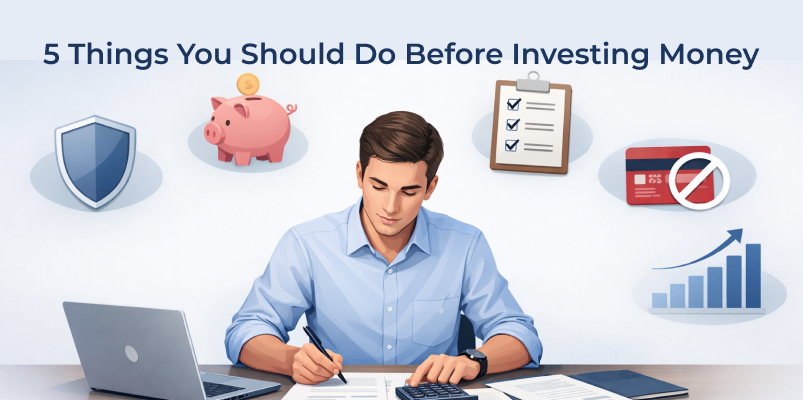
Starting your investment journey is exciting, but hold on a second. Most first-time investors make the mistake of putting money into stocks without getting their basics right. Investing works best when a solid financial base backs it. Before you invest in the stock market or any other assets, you need to sort out a few important things.
1. Build an Emergency Fund
Life throws unexpected costs at everyone. A sudden medical bill or a job loss can shake your finances. Having some savings set aside keeps you covered without touching your investments.
This is exactly why financial advisors continue to promote the idea of an emergency fund. You should have at least 6 months of expenses saved up in a regular savings account or in liquid funds. Not in stocks, not in fixed deposits that lock your money away. Somewhere, you can access it within a day or two. Without this backup, you'll end up selling your investments at the worst possible time.
2. Health Insurance Coverage
Medical expenses can be one of the biggest financial shocks. A single hospitalisation can set you back by lakhs. And if you don't have insurance, that money comes straight out of your savings or investments.
Getting health insurance should be non-negotiable. Spend some time comparing different health insurance plans available in the market, or reach out to us, and we will help you find a plan that fits your needs. Yes, paying premiums every year feels like money going down the drain until you actually need treatment. That's when you realise it's the smartest money you ever spent.
3. Life Insurance Protection
This one's for anyone with financial dependents. If your family relies on your income, you absolutely need life insurance plans in place before investing. Term insurance is your best bet here. It's affordable and gives substantial coverage.
Start by listing your family’s everyday expenses, any loans you are still paying off, and major future needs like college fees. That total gives you a fair idea of how much cover makes sense. Once you've got this protection sorted, you can put money into investments without lying awake at night worried about what happens to your family.
4. Pay Off High-Interest Debt
High-interest debt can undo your investment gains. For example, earning 12% from your investments doesn’t help much if you’re paying 18% interest on credit cards. Paying off these debts first gives you more flexibility to invest effectively.
The maths is pretty straightforward. Clear out expensive debts first, especially credit cards and personal loans that charge crazy interest rates. Clearing high interest loans gives you more flexibility and room to invest consistently.
5. Define Your Financial Goals and Risk Tolerance
What are you investing for? Is it a retirement 30 years away, a home you want in 5 years, or your child’s future education? Your timeline changes everything about how you should invest. Long-term goals let you ride out market ups and downs. Short-term goals need safer options.
Also, figure out your risk appetite honestly. Can you watch your investment value drop 30% and not panic? Or does even a 10% dip make you lose sleep? There's no shame in being conservative. Just match your investments to your comfort level.
Conclusion
These steps might not be flashy, but they’re what actually keep your finances steady. With an emergency fund, proper insurance, cleared debts, and clear goals, you can start investing without the stress.
At Integrated, our experience shows that investors who take these steps seriously tend to do much better in the long run. So take a breath, get these fundamentals sorted, and then start investing with real confidence.