



Difference Between Gold ETF and Physical Gold Explained Simply
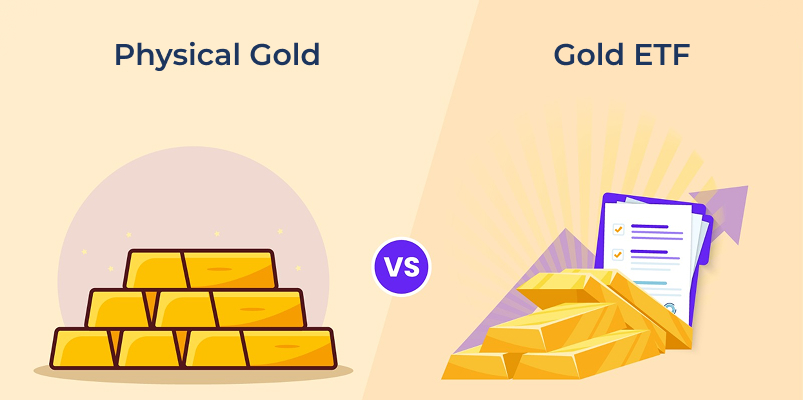
Gold has been a symbol of security and wealth to Indian investors. It is emotionally as well as financially significant, whether it is festivals or long-term savings. In recent years, there have been other avenues of investing in gold, such as the Gold Exchange Traded Fund, and this has enabled people to invest in gold in a more convenient and transparent manner.
Both forms represent ownership of the same metal, but how you hold and manage them is what sets them apart.
What is Gold ETF
A Gold ETF investment allows investors to own gold in electronic form. Each unit represents the worth of a particular amount of pure gold held in a safe deposit by the fund. It trades just like company shares in stock markets.
Key features:
- No physical storage or locker space is required.
- Prices move according to the real-time gold prices.
- Easy to buy and sell through your Demat account.
It provides an easy, liquid, and cost effective means of investment in gold without the need to move the gold physically.
What is Physical Gold
Physical gold includes coins, bars, and jewellery that you can hold and use. It is highly embedded in Indian culture and is commonly transmitted as part of generational inheritance.
Key features:
- A tangible asset that provides emotional satisfaction.
- It can be gifted or used during family occasions.
- Widely accepted and simple to comprehend among the usual investors.
However, it requires safekeeping which comes with extra expenses such as making charges, storage, and purity checks.
Key Comparison Between Gold ETF and Physical Gold
| Feature | Gold ETF | Physical Gold |
|---|---|---|
| Form | Digital ownership | Tangible metals (coins, bars, jewellery) |
| Liquidity | Traded easily on exchanges | It may take time to sell or exchange |
| Purity | 99.5% assured purity | Can vary by source or jeweller |
| Cost | Low transaction and management costs | Includes making and storage charges |
| Storage | No physical space required | Needs locker or safe storage |
Why Many Investors Prefer ETFs Today
Convenience and flexibility are some of the things modern investors seek. That’s where ETFs fit well.
Advantages include:
- Transparent pricing that is directly related to the market rates.
- No concerns about theft, damage, or purity.
- Easy entry and exit through online platforms.
- Ideal for diversifying portfolios digitally.
Investing in the gold ETF is a decision to allow an investor to be part of the price movement of gold without compromising on liquidity and transparency.
Which Option Suits You Better
If you value emotional attachment, family use, or cultural significance, physical gold will always have its place. However, when you want to invest effectively, follow market performance, and handle assets online, the best gold ETF to buy in India might be a more suitable choice. They both are good, depending on what you want out of your investment.
Conclusion
Gold is eternal, but there has been a change in the manner in which we invest in it. Physical gold shows tradition and emotions, whereas gold ETFs signify advancement and realism. Balancing the two may help investors maintain tradition while still accumulating wealth.
To explore more about gold ETFs and other exchange-traded options, connect with Integrated, your partner in modern investing.