



RBI Keeps Repo Rate Unchanged at 5.25%
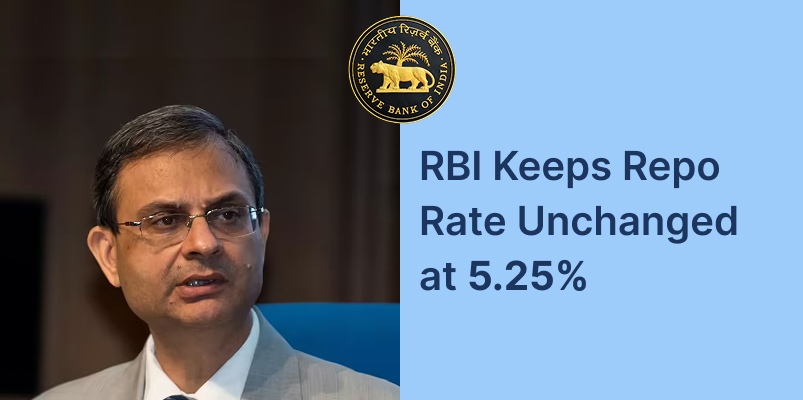
On 6 February 2026, the Reserve Bank of India shared its latest policy update. The repo rate has been left unchanged at 5.25%.
Interest rates usually move when something feels off, either prices begin rising too fast or economic activity starts slowing. Neither of those pressures appears at the moment.
The Monetary Policy Committee has also continued with a neutral stance.
What the Repo Rate Actually Controls
The repo rate itself is the rate at which banks borrow short-term funds from the RBI. Over time, this influences borrowing costs across the system, from home and personal loans to business credit and even deposit rates.
When the repo rate changes, borrowing costs across the system eventually change too. When it stays the same, it sends a message that the central bank is comfortable with where things stand. That is exactly what this decision does.
Inflation and Growth Context
Looking at inflation, there has been no sharp shift in price trends. Movements have been gradual, and nothing so far has pushed the RBI into taking urgent action.
Growth conditions also remain steady. The RBI has raised its real GDP growth estimates for the first half of 2026-27, and has placed the number at 6.9 percent for the first quarter and 7.0 percent for the second.
What This Means for Loan EMIs
For borrowers, this is mostly good news. After years of changing interest rates, predictability matters. With the repo rate on hold, EMIs on floating rate loans are unlikely to move sharply in the near term.
That makes planning easier for households. Banks may still tweak rates at their own pace, but there is no policy pressure pushing them to act aggressively.
What About Fixed Deposits and Savings
Savers should not expect sudden changes either. Deposit rates usually move only when interest rates move decisively. Since that has not happened, FD rates are likely to remain where they are
For most people, this is a reminder to focus less on short term rate changes and more on whether their savings match their goals and timelines.
What the RBI Is Signalling Next
The RBI has indicated that upcoming data will shape its future decisions. For now, it appears comfortable avoiding any move that could disturb existing financial conditions.
By keeping the repo rate unchanged at 5.25 percent, the RBI has chosen stability over action, and for most individuals and businesses, that is actually good news.
Conclusion
This decision is less about making a statement and more about keeping things steady. Inflation is not creating pressure, growth is holding up, and the economy does not need intervention right now.
For borrowers, that means EMIs should remain manageable. For savers, returns are likely to stay steady. For investors, policy surprises are less likely in the near term.
For the time being, the RBI is letting the economy develop naturally. This makes it easier for households and businesses to plan their finances.
Sources - Reserve Bank of India
Disclaimer - This blog is for informational and educational purposes only and should not be considered financial, investment, or legal advice.